
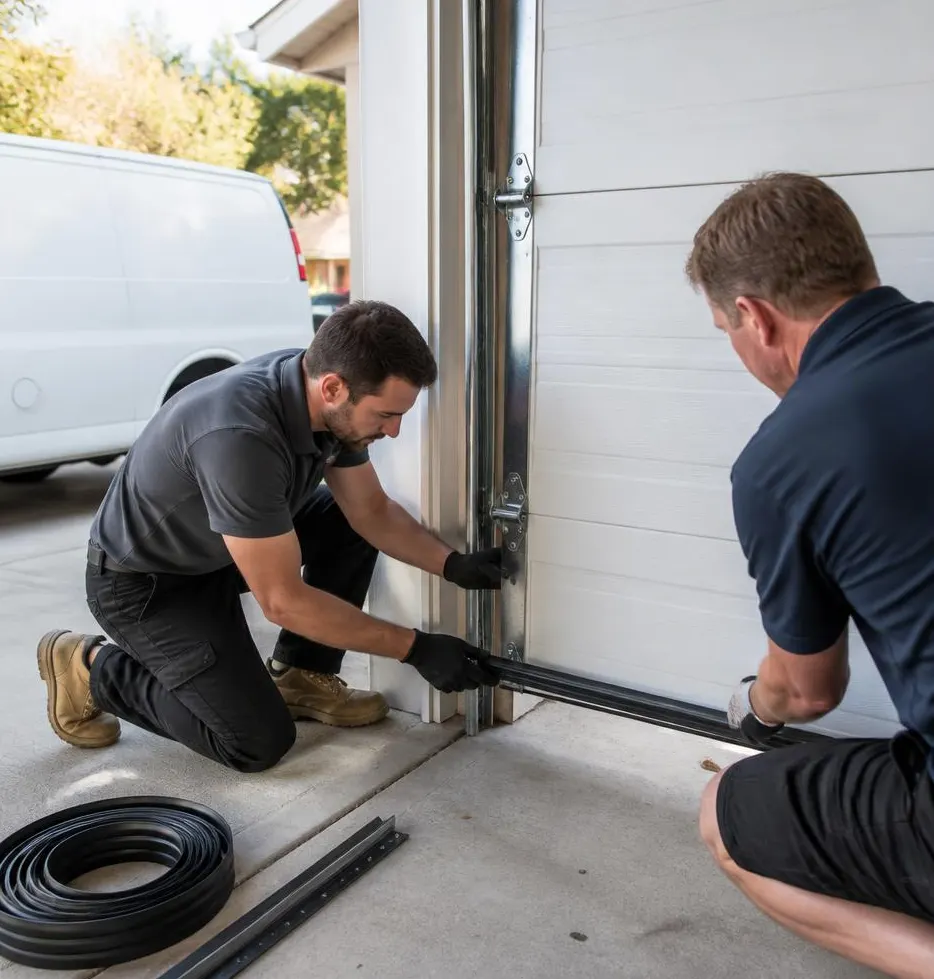
What a Technician Sees After a Storm Rolls Through
The calls usually come in a day or two after a bad blow. A homeower pulls into the driveway and the door looks fine from the street, but up close the panels are bowed outward like a sail that got punched from the inside. Sometimes it's worse: the top panel has popped out of the track completely, the struts are bent, and the opener's drive gear is stripped because the door tried to travel on a track that's no longer straight. On older doors we find rollers rusted solid from humidity, springs that gave out mid-storm because they were already past their service life, and bottom seals so rotted from standing water that wind-driven rain pushed straight under the door and into the garage.
None of that is unusual here. Hurricane season in this part of Florida runs well into November, and a garage door that looks fine on a calm day can fail fast once sustained wind and gusts start loading it.
Why the Garage Door Is a Home's Weakest Wall
Every other opening in a house, windows, exterior doors, is small and braced on all four sides. A garage door is the largest moving opening in the home, often 16 feet wide, held in place by rollers riding in thin metal tracks and a few hinges between panels. When wind pushes against a closed garage door, it's pushing on a surface with far less structural backup than a solid wall. If that door buckles or blows in, the sudden pressure change inside the garage can stress the roof structure from underneath, which is why building codes in wind-prone regions require garage doors rated for specific wind loads. An older door, or one with worn hardware, may not meet that standard anymore even if it did when it was installed.
Signs Your Door Won't Hold Up to the Next System
- Visible bowing or flexing when the door is closed and wind pushes on it, even moderate wind.
- Tracks that are loose, bent, or pulling away from the wall where they're bolted in.
- Rust at the hinges, rollers, or bottom bracket, a near-constant issue given the humidity and salt air closer to the coast.
- Springs older than seven to ten years or springs that are visibly stretched, gapped, or rusted.
- A bottom seal that's cracked, flattened, or doesn't sit flush, letting wind-driven rain in during the afternoon downpours that are routine this time of year.
Concrete Steps to Prepare the Door Itself
- Check the track bolts and brackets. Tighten anything loose. A track that shifts even a little under pressure can let a panel jump out during gusts.
- Inspect and lubricate rollers and hinges. Moisture swells wood-composite panels and seizes metal rollers; a light silicone-based lubricant (not grease that collects grit) keeps things moving freely and resists corrosion.
- Test the auto-reverse and balance. Disconnect the opener and lift the door halfway by hand. It should stay put. If it drops or shoots up, the springs are compensating poorly and won't hold under wind load either.
- Replace a worn bottom seal before the season, not after. A new seal is inexpensive insurance against water intrusion during the heavy, fast-moving storms common here.
- Consider a battery backup for the opener. Power outages during storms are common, and a battery backup lets you close and lock the door even with the grid down.
- If you have an older door without a wind-load rating, ask about retrofit bracing kits or whether the door itself needs replacing ahead of a major storm, not during one.
The Climate Factor: Rust, Swelling, and Salt Air
Heat and humidity swell wood-composite panels enough to bind in the tracks, and the cycle of afternoon downpours followed by sun creates condensation inside steel panels that rusts from the inside out. Closer to the coast, salt air accelerates corrosion on springs, hinges, and tracks noticeably faster than inland. A twice-a-year hardware check isn't optional here, it's what keeps a door functioning correctly when it actually needs to perform under pressure.
When to Call East Palatka Garage Door Pro
If your door is bowing under wind, the track has shifted, or you're not sure the springs will hold through another named storm, that's a job for a technician, not a weekend fix. East Palatka Garage Door Pro handles garage door spring repair and off track door repair for homeowners throughout East Palatka, Palatka, San Mateo, Hastings, Crescent City, Interlachen, Pomona Park, and Elkton, and we can run a full pre-storm tune-up that checks balance, hardware, and seals in one visit.
Don't wait for the next system to find out your door won't hold. Call East Palatka Garage Door Pro today to get your door storm-ready before the weather turns.